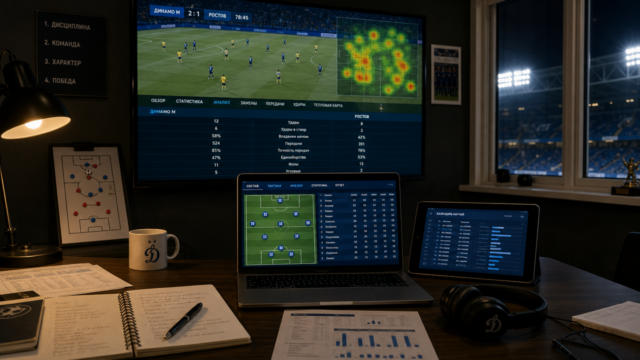

An English side lost 1-2 to a south-coast opponent after a 95th-minute header from Joao Pedro. Welbeck opened the scoring, Diallo equalized, and Garnacho had a goal ruled out because Zirkzee was offside. The late finish showed how quickly a match can change when an even contest reaches stoppage time.
The same method can transfer to map-based competitive games. Early deficits, selection limits, and late rounds can shift market prices just as match events change a football assessment. The useful rule is to compare the available price with evidence about the developing game state rather than relying only on the final score.
A Fast Start Can Decide a Match
A top-flight round-22 fixture provides a clear example. The home side beat the visitors 5-1 after taking a 2-0 lead within four minutes and moving 4-0 ahead by the 40th minute. The home side was 12th before the match, while the visitors were fourth with 40 points. The result lifted the winners to 10th place and left the visitors fourth.
That sequence shows why an early deficit matters. A team that concedes twice in the opening minutes has less time to control the match, while the leading side can protect its advantage and attack the space left by a frustrated opponent.
Reading Late Match Volatility
The 1-2 result in the English fixture also shows why a late goal can matter more than a calm first half suggests. The equalizer kept the match open, the disallowed strike removed a possible lead, and the 95th-minute header settled the contest. A live assessment should account for the score, remaining time, attacking pressure, and the quality of chances rather than treating the early pattern as final.
Football Signals and Market Actions
| Match situation | Key signal | Recorded outcome | Analytical use |
|---|---|---|---|
| English fixture | Disallowed goal followed by a late header | 1-2 after a 95th-minute goal | Keep late volatility in the assessment |
| Top-flight round-22 fixture | 2-0 inside four minutes and 4-0 by the 40th | 5-1 home win | Treat an early deficit as a major change in match state |
For map-based competitive games, the equivalent check is the selection process. Assess which maps remain available, whether the strongest map is likely to be removed, and how the teams have performed on the remaining options. A broad overall record can be misleading when the available map pool is much weaker.
The strongest analysis connects the event to the market response: an early collapse changes the football state, while a restricted map pool changes the competitive-game state. Both require attention to what remains available, not only to a team’s headline record.