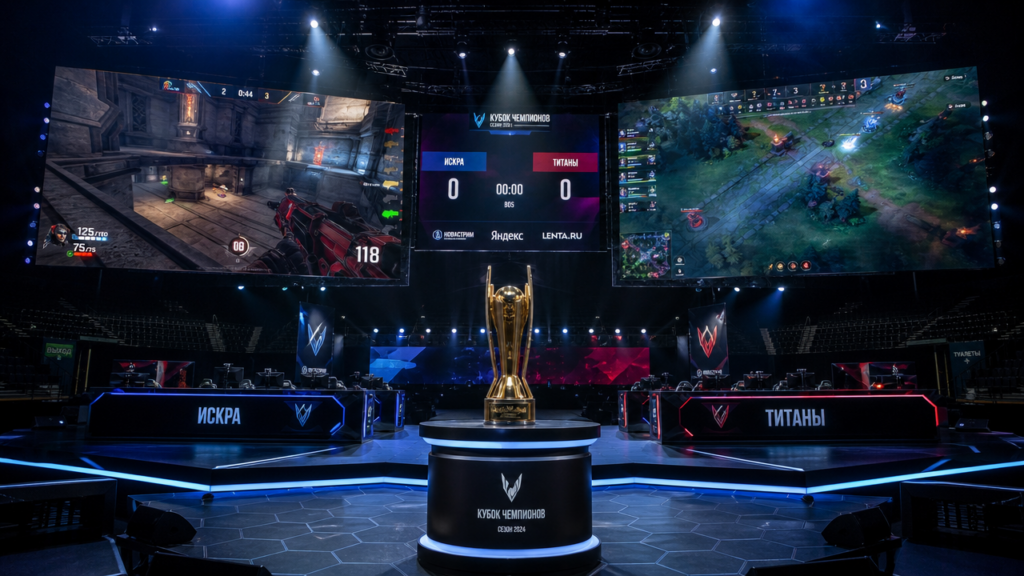
For an esports bettor, a game becomes easier to assess when it has scheduled top-tier tournaments, published prize structures, and a stable competitive circuit. The first question is not only who wins, but which games host esports tournaments with enough structure and viewership to support meaningful analysis.
The Tier 1 Core: MOBAs and Tactical Shooters
A leading MOBA remains the volume benchmark. Competitive play began in 2011 with regional summer splits and still centers on a global championship and a major mid-season invitational. One 2018 global championship awarded $3 million, while industry estimates put the game’s player base above 100 million.
The 2026 calendar included an opening event in Seoul during March, a mid-season invitational in Vancouver during July, and a global championship in China from October to November. These events show how a mature circuit links regional competition with international tournaments.
Another major MOBA is the prize-pool outlier. Its 2021 international championship reached $40 million. The 2026 calendar also lists a third-party event from 19 to 27 September with a $1 million prize pool, giving the season a clearly dated tournament anchor.
Tactical shooters occupy another major part of the esports calendar. Major events in Antwerp in 2022 demonstrated the audience for this format. A separate 2026 circuit included international events in Bangkok and Toronto, with points contributing to qualification for the season-ending championship. The 2026 calendar lists that championship from 24 September to 18 October, with a $2.25 million prize pool.
| Game type | Key event | Date / location | Competitive significance |
|---|---|---|---|
| MOBA | Opening international event | March 2026, Seoul | Start of the international circuit |
| MOBA | Mid-season invitational | July 2026, Vancouver | Mid-season international event |
| MOBA | Global championship | October–November 2026, China | Largest annual event in the circuit |
| Tactical shooter | International Masters event | February 2026, Bangkok | Points toward the season-ending championship |
| Tactical shooter | International Masters event | 2026, Toronto | Points and international competition |
| MOBA | Third-party championship | 19–27 September 2026 | $1 million prize pool |
| Tactical shooter | Season-ending championship | 24 September–18 October 2026 | $2.25 million prize pool |
Battle Royale and Arena Shooters: Volume Without Stable Moneyline Value
An industry viewership ranking placed a popular battle royale title ninth, another battle royale title eighth, and a team-based shooter tenth. The first battle royale game distributed $100 million in prizes between 2018 and 2019, including a $3 million individual win, although its developer interest and prize funds later declined. The second remained popular partly because of its handheld version. A team shooter moved to a sequel in 2022, a transition that caused backlash and reduced viewership.
These formats still attract official tournaments, but their competitive structure differs from that of long-running league circuits. Battle royale events involve larger lobbies and placement-based scoring, while team shooters depend more heavily on roster form and map selection. That can make results harder to compare across matches and seasons.
How to Read the 2026 Calendar
The 2026 tournament schedule for the leading MOBA and tactical shooter covered major international events, while excluding other game categories from that specific top-tier list. That exclusion does not mean those games lack major tournaments; their schedules may be controlled by different organizers or split across third-party events.
The 2026 calendar confirms a dated season-ending championship for a tactical shooter and a $1 million third-party event for a leading MOBA. Other competitive games also appear in broader schedules, including battle royale titles, team shooters, and mobile games.
For games for which esports tournaments are held, the calendar divides into several practical groups. Long-running MOBA and tactical-shooter circuits offer the deepest tournament histories and the clearest international progression. Other MOBAs can offer larger prize pools and higher variance, while battle royale and arena-shooter events rely more on placement, lobby strength, and short-term form.
A stable tournament circuit creates more comparable data, while a fragmented schedule makes evaluation harder. The most useful starting point is therefore the event structure: identify the game’s competitive format, confirm the tournament dates and prize pool, and then compare teams or players within that context.